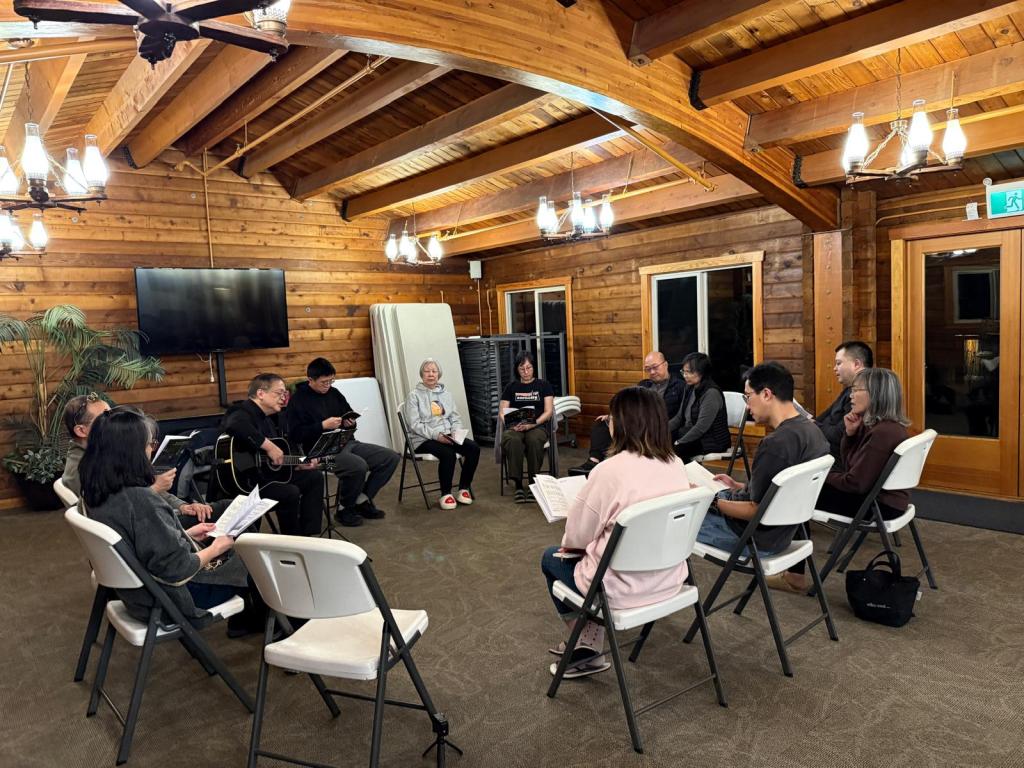
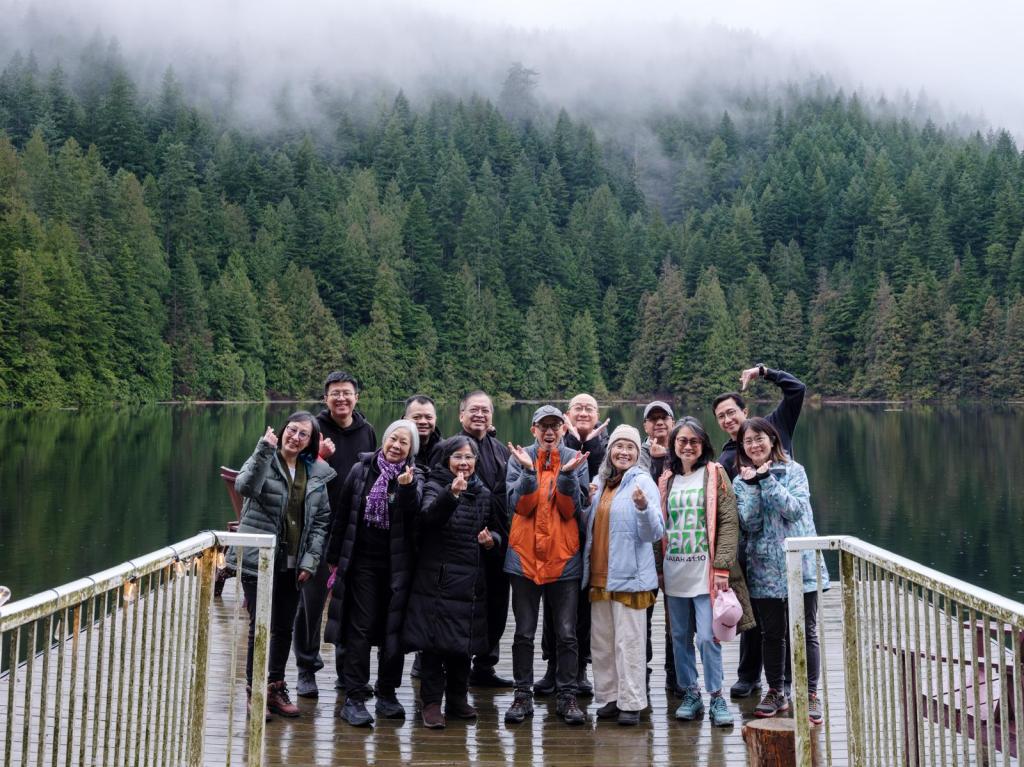
I returned from the Loon Lake retreat with a full heart and a renewed sense of companionship on a journey that can often feel lonely. From January 12 to 15, a group of Chinese‑speaking ministers and church leaders gathered for a time of rest, reflection, and conversation. The retreat was fully funded by the United Church Foundation, which meant we could participate without worrying about reimbursements or administrative details. That generosity set a tone of welcome from the very beginning.
This was actually the second time this group has gathered; the first retreat took place two years ago. We are already hoping to meet again two years from now. Not everyone who joined the first retreat was able to come this time, and their absence was felt. Yet I hold onto the hope that when we gather again, all of us—old friends and new companions—will be able to share the same space once more. These rhythms of meeting every two years remind me that community is something we return to, again and again, trusting that God continues to draw us toward one another.
The gathering was organized by Rev. Dr. Alan Lai, a professor, educator, and United Church minister whose pastoral imagination continues to create spaces where honest conversation can flourish. Most participants were from the United Church, yet I never felt like an outsider. I was grateful to be invited as someone from a different denomination, and even more grateful that Rev. Dr. Lai arranged rides for me, knowing I cannot drive on the highway. That simple act of care reminded me how community is often built—through attention, kindness, and the willingness to make room for one another.
Being a progressive Christian within the Chinese Christian world can be isolating. Many of us know what it feels like to hold questions others prefer not to ask, or to carry convictions that do not always fit neatly into inherited frameworks. At Loon Lake, I met people who understood this tension deeply. We shared our stories, our struggles, and the quiet hopes we carry for our churches and communities. There was no pressure to produce a plan or deliver a concrete outcome. As an engineer by training, I often think in terms of structure and clarity, but this time the gift was in the process itself.
One theme that impressed me throughout our conversations was how proactive the United Church of Canada has been in nurturing its Chinese‑speaking ministries, especially in Vancouver and Toronto. They have welcomed talented Christians into new initiatives—church planting, leadership development, courses offered in Chinese, and podcasts that engage theology in ways that are contextual, relevant, and courageous. It is rare to see a denomination invest so intentionally in linguistic, cultural, and theological diversity. Their work shows that Chinese‑speaking Christian communities are not an afterthought; they are part of the unfolding story of the church in this land.
For me, this is not about comparison or copying. It is about learning. Their courage and creativity invite me to reflect on what this might mean for our Anglican ministry. The question is not, “Why aren’t we doing the same?” but rather, “What can we learn from their openness, their willingness to experiment, and their trust in emerging leaders?” Their example encourages me to imagine how the Anglican tradition—with its depth, sacramentality, and thoughtful faith—might also nurture spaces where Chinese‑speaking Christians can explore progressive theology, ask honest questions, and grow in discipleship.
What emerged from our retreat was not a detailed roadmap but a shared posture:
- embracing diversity
- living with uncertainty
- practicing confession and humility
- committing to learning
- cultivating critical thinking
- engaging in communication
- choosing to listen
- grounding everything in practice
These are not small things. They are the foundations of genuine dialogue and the seeds of collaboration. They are also the qualities needed for any community that hopes to bear witness to the gospel of Christ in a complex, multicultural world.
We left Loon Lake without a concrete plan, but with something more precious: a shared sense that we are not alone, and that God is already at work among us. The retreat reminded me that the future of ministry is not found in copying others, but in learning from one another with humility and hope. It reminded me that the journey of faith is not about certainty but companionship; not about uniformity but courage; not about defending boundaries but nurturing life.
I am grateful for the days at Loon Lake, for the people I met, and for the quiet conviction that grew in me: there is a future for progressive Chinese‑speaking Christian communities—one shaped by openness, honesty, and hope.
And I look forward to walking that future together.

 Fr. Bill's Journal 莫牧師的點滴
Leave a comment